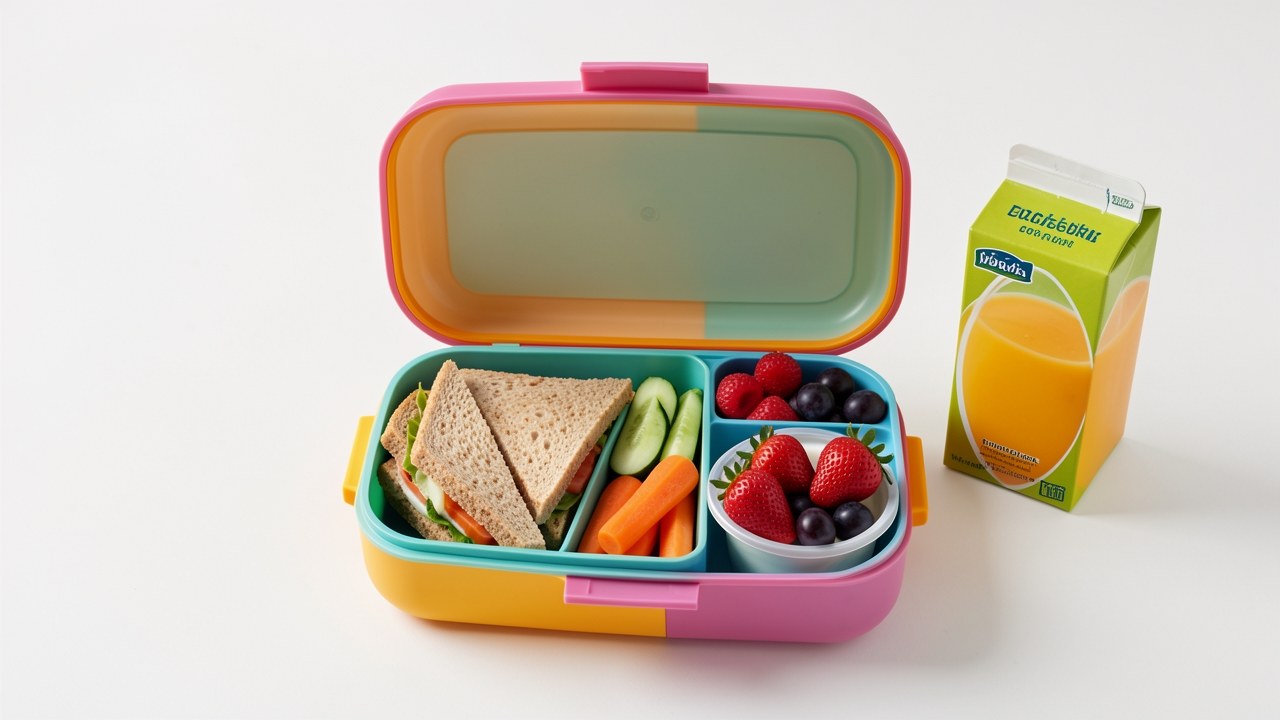
a balanced lunchbox
Building a lunchbox that fuels your child through the school day doesn't have to be complicated. A simple formula helps ensure meals are both satisfying and nutritious. The Kid’s Healthy Eating Plate, developed by nutrition experts at Harvard, offers a clear visual guide: fill half the lunchbox with colorful fruits or vegetables, one-quarter with whole grains, and one-quarter with healthy proteins. This balance provides energy, fiber, and building blocks for growing bodies.
A practical packed lunch for school can include one fresh fruit, two vegetables, one healthy protein, and one whole grain. You don't need to hit every category every single day—aim for variety across the week. For example, Monday's lunch might include apple slices, carrot sticks, a hard-boiled egg, and whole-grain crackers. Tuesday could feature a mixed fruit cup, cucumber rounds, turkey roll-ups, and a small whole-wheat pita.
- Fruits and vegetables: Choose a colorful mix to provide vitamins and fiber.
- Whole grains: Opt for whole-wheat bread, wraps, or crackers for sustained energy.
- Healthy proteins: Include lean meats, eggs, beans, or nut butter (if allowed).
- Dairy or alternatives: A small serving of yogurt, cheese, or milk can complement the meal.
- Water: Always pack a refillable water bottle for hydration.
Sources: Harvard T.H. Chan School of Public Health, Medindia
10 No-Cook Lunchbox Ideas for Busy Mornings
When the morning rush is real, no-cook lunches are a lifesaver. They require minimal prep and can be assembled the night before. Using a bento box with divided compartments helps with portion control and keeps foods separate, preserving textures and making the meal more appealing. You can also cut foods into shapes or make kabobs for extra fun—these small touches can make a big difference in what your child actually eats.
Here are ten no-cook lunchbox combinations that are balanced and easy to assemble. Each idea aims to include fruits, vegetables, protein, and a whole grain, following the balanced plate method.
- 1. Turkey & cheese roll-ups with whole-grain crackers, cherry tomatoes, and grapes.
- 2. Hummus with pita wedges, carrot sticks, cucumber slices, and a clementine.
- 3. Hard-boiled eggs, whole-grain mini bagels, cream cheese, bell pepper strips, and blueberries.
- 4. Chicken salad (from rotisserie chicken) in a whole-grain tortilla, apple slices, and baby spinach leaves.
- 5. Quesadilla (pre-made, no-cook version with cheese and beans) cut into strips, salsa for dipping, corn, and mango chunks.
- 6. Yogurt parfait with granola and berries in a jar, with a side of snap peas and whole-grain pretzels.
- 7. Cottage cheese with peaches, whole-grain crackers, and broccoli florets.
- 8. Tuna salad (from canned tuna) with whole-grain crackers, celery sticks, and pear slices.
- 9. Almond butter and banana sandwich on whole-wheat bread (if nut-free school, use sunflower seed butter), with cucumber rounds and strawberries.
- 10. Pasta salad (pre-cooked) with cherry tomatoes, mozzarella balls, and a side of grapes and green beans.
Sources: Harvard T.H. Chan School of Public Health, Holley Grainger, The Real Food Dietitians
5 Hot Lunch Ideas That Pack Well in a Thermos
Cold lunches can get boring, especially in winter. A thermos opens up a world of warm, comforting meals that your child can look forward to. To keep foods warm until lunchtime, fill the thermos with hot water and let it sit for a few minutes before emptying and filling it with the hot food. This simple step helps maintain a safe and appetizing temperature.
These five hot lunch ideas are just concepts—you can adapt them to your family’s favorites. The key is to choose foods that hold up well in a thermos and don't become soggy.
- 1. Hearty vegetable soup with whole-grain bread roll on the side.
- 2. Mac and cheese with peas and a side of fruit.
- 3. Chicken noodle soup with a side of whole-grain crackers.
- 4. Leftover chili or stew with a small container of shredded cheese and cornbread.
- 5. Pasta with marinara sauce and meatballs, plus a side of raw veggie sticks.
Sources: Healthy Family Project
Lunchbox Packing Tips to Keep Food Fresh
Keeping food safe and fresh from home to lunchtime is important. Use an insulated lunchbox and include an ice pack to keep perishable foods cold. You can also freeze a water bottle or a small juice box overnight and place it in the lunchbox—it will stay cold and thaw by lunchtime.
For hot foods, use an insulated thermos and follow the preheating tip mentioned above. Involving your child in the packing process can help them make healthier choices and be more excited to eat. Preparing fruits and vegetables in advance—washing, chopping, and storing them in airtight containers—saves time during busy weeks and makes it easier to grab and go.
- Invest in an insulated lunchbox and a reusable ice pack.
- Freeze a water bottle or yogurt tube to double as an ice pack.
- Fill a thermos with hot water before adding warm food.
- Pack sauces and dressings in small, separate containers to prevent sogginess.
- Involve your child in choosing and packing their lunch—they are more likely to eat it.
Sources: Harvard T.H. Chan School of Public Health, Holley Grainger, Healthy Family Project
How to Involve Kids in Choosing and Preparing Lunches
Getting kids involved in lunch preparation can turn a daily chore into a positive experience. When children help choose and assemble their lunches, they are more likely to eat the food—a win for parents and kids alike.
Start by letting your child pick from a few pre-approved options. You can provide a list of proteins, fruits, vegetables, and grains, and let them choose one from each category. For younger kids, counting out crackers or placing food in compartments can be a task they manage. For older kids, they can independently pack their own lunch the night before.
Making food fun also encourages participation. Cut sandwiches into shapes, skewer fruit onto sticks, or create a colorful bento box together. These small efforts help kids take ownership of their meals.
- Offer two or three choices for each food group and let your child pick.
- Set up a 'lunch packing station' with containers, napkins, and utensils within reach.
- Let kids help wash, chop (with safe knives), and arrange food.
- Praise their efforts, even if the lunch isn't perfectly balanced—every small step counts.
Sources: Harvard T.H. Chan School of Public Health, Medindia, The Real Food Dietitians
Frequently asked questions
What are some healthy lunchbox ideas without bread?
There are plenty of options that skip traditional sandwiches. Consider a bento box with hard-boiled eggs, cheese cubes, whole-grain crackers, veggies, and fruit. Or try a quinoa salad with vegetables and chickpeas, that can be eaten cold. Another idea is a 'snack plate' with hummus, pita wedges, cucumber rounds, cherry tomatoes, and grapes. Leftover pasta salad, rice bowls, or chicken and veggie skewers also work well and are bread-free.
Sources: Harvard T.H. Chan School of Public Health, The Real Food DietitiansHow do I keep a packed lunch cold without a fridge?
Use an insulated lunchbox and include an ice pack. For an extra cool boost, freeze a water bottle or a yogurt tube overnight and place it in the lunchbox—it will help keep food cold and be thawed by lunchtime. Pack perishable items like yogurt, cheese, and lunch meat with the ice pack directly adjacent to them. If you're packing a thermos, you can store it in the fridge before filling with cold items, but the ice pack is the main defense. Also, avoid putting the lunchbox in direct sunlight.
Sources: Holley GraingerWhat lunchbox foods are best for picky eaters?
For picky eaters, include at least three familiar foods they already like, and one new food to encourage trying something different. Deconstructing sandwiches into 'lunchable style'—with crackers, cheese, and meat separate—can help kids who don't like sandwiches. Cutting the same fruit or vegetable in different ways, like round cucumber slices versus sticks, can increase appeal. Also, letting your child help choose and prepare the lunch can make them more willing to eat.
Sources: The Real Food Dietitians, MedindiaCan I pack last night's dinner for lunch?
Absolutely. Leftovers can make quick, nutritious lunches. The key is to reheat them to a safe temperature before packing if they will be eaten warm. For cold leftovers, like pasta salad or chicken, pack them in a container with an ice pack and keep refrigerated until your child leaves. If packing warm food, use a pre-heated thermos as described earlier. Make sure to follow general food safety: refrigerate leftovers promptly after dinner, and pack them in the lunchbox in the morning.
Sources: Harvard T.H. Chan School of Public Health, Healthy Family ProjectSources
- Packing a Healthy Lunchbox - The Nutrition Source — Harvard T.H. Chan School of Public Health
- 125 Healthy Lunchboxes for Kids—Never Run Out of School Lunch Ideas Again | Holley Grainger — Holley Grainger
- Healthy Lunchbox Tips and Recipes for Kids — Medindia
- 22 Warm Lunchbox Ideas and Recipes | Healthy Family Project — Healthy Family Project
- Dietitian-Approved Lunch Ideas for Kids — The Real Food Dietitians