Assess Your Family's Weekly Routine
Before you design a meal prep schedule, look at a typical week in your family. Identify nights when everyone is home, nights with activities that cut into dinner time, and days when you might have more time to cook. This helps you match meals to your real life instead of an ideal plan.
Consider assigning a theme to certain days, such as Meatless Monday or Stir-Fry Friday. This simplifies planning by limiting choices for each day. You can adapt these themes to what your family enjoys and to your schedule.
- List recurring commitments: sports, classes, meetings, late workdays.
- Note nights when you have 30 minutes or less to cook and nights with more time.
- Involve family members in choosing favorite recipes and prep tasks.
- Display the weekly menu on a whiteboard or paper where everyone can see it to answer the 'What's for dinner?' question.
Sources: Scripps Affiliated Medical Groups, The Nutrition Source, Harvard T.H. Chan School of Public Health
Choose Your Prep Approach: Full Prep vs. Partial Prep
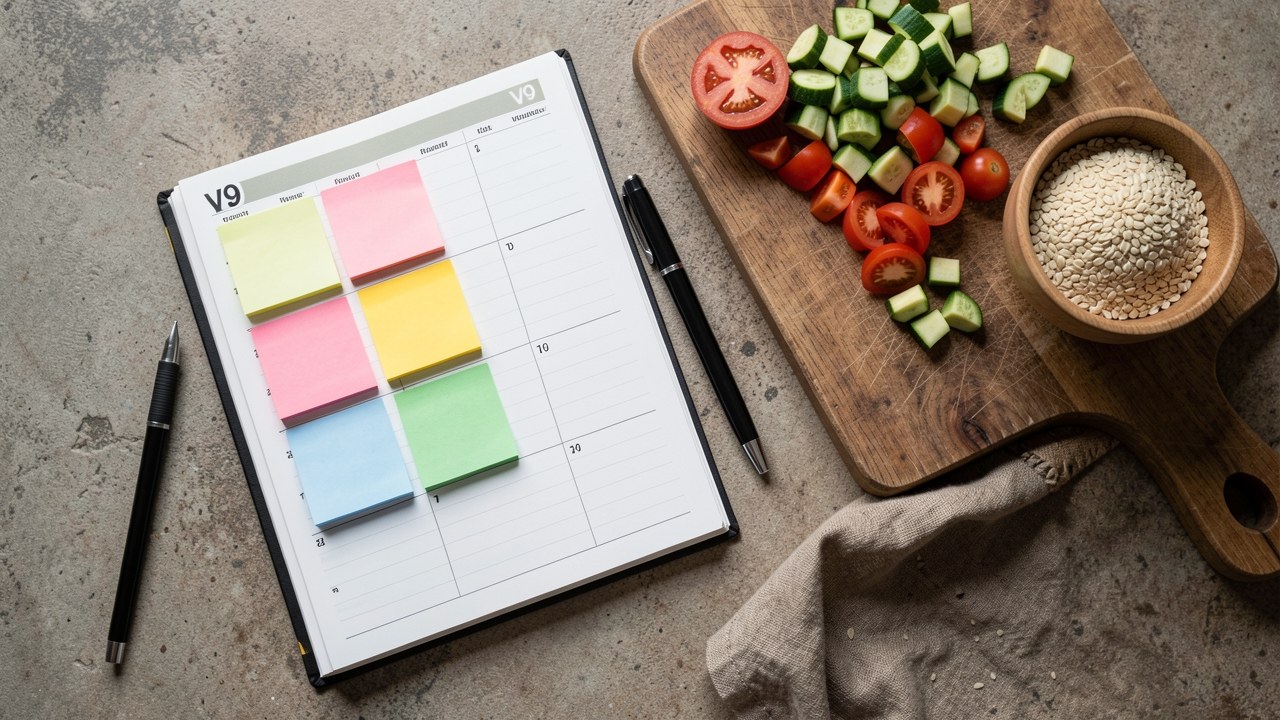
Decide how much cooking to do in advance. Full prep means cooking complete meals that only need reheating. Partial prep, often called component prep, involves preparing ingredients such as chopped vegetables, cooked grains, or marinated proteins, so you still cook a little each night but faster.
If you're new to meal prep, start by planning enough dinners for two to three days of the week. This keeps the task manageable while you learn what works for your family. You can gradually prep more as you get comfortable.
- Full prep: Cook double batches and portion into containers for grab-and-go meals.
- Partial prep: Wash and chop salad greens, hard-boil eggs, cook beans, or marinate poultry or tofu for quick cooking later.
- Aim to reduce cooking nights to three or four by choosing recipes that double or triple easily.
Sources: Scripps Affiliated Medical Groups, The Nutrition Source, Harvard T.H. Chan School of Public Health
Build a Master List of Prep-Friendly Recipes
Create a list of recipes that reheat well or can be easily portioned. Choose dishes that contain hearty vegetables like bell peppers, broccoli, cauliflower, onions, and potatoes—these can be chopped ahead and stored in airtight containers for three to five days. Cooked grains such as pasta, quinoa, brown rice, and barley keep in the refrigerator for up to five days, making them reliable bases for quick meals.
Make sure each recipe fits your family's tastes and your cooking space. When you find a recipe that works, keep it on the list and rotate it in regularly to simplify planning.
- Include one-pot dishes, stir-fries, and sheet-pan meals that use prepped components.
- Identify recipes that freeze well for busy weeks.
- Keep the list visible in your kitchen or on your phone.
Sources: Scripps Affiliated Medical Groups, The Nutrition Source, Harvard T.H. Chan School of Public Health
Create Your Custom Prep Timeline
Your prep timeline is a sequence of tasks from planning to cooking to storing. Choose a designated day of the week to plan the menu and write the grocery list. Ideally, shop one to two days before your main prep day so ingredients are fresh. You can also spread tasks across different days if that's easier.
On your chosen prep day, start by cooking foods that take the longest, such as chicken or fish, whole grains like brown rice or quinoa, and dried beans. While they cook, chop vegetables and fruit or wash salad greens to use later. This multitasking makes the most of your time.
- Plan your menu and grocery list on a designated day, such as Saturday.
- Shop one to two days before prep day, like Sunday for a Monday prep.
- On prep day, cook long-cooking items first, then chop and assemble.
- Portion cooked food into individual containers for grab-and-go meals.
Sources: Scripps Affiliated Medical Groups, The Nutrition Source, Harvard T.H. Chan School of Public Health
Sample Schedules for Different Family Routines
To help you visualize how a weekly meal prep schedule can work, here are two sample timelines. These are examples to adapt, not rigid rules. Adjust the days and tasks to match your family's actual commitments and energy levels.
The first sample suits a family with a free weekend and busy weeknights. The second is for a family with weekend activities, using a midweek prep session to break up the work.
| Day | Schedule A: Weekend prep | Schedule B: Midweek prep |
|---|---|---|
| Saturday | Plan menu and grocery list | Grocery shop for the week |
| Sunday | Shop and prep: cook grains, chop vegetables, portion meals | Rest or family activities |
| Monday | Enjoy prepped meals; no cooking needed | Cook a batch of grains and proteins for the next few days |
| Tuesday | Use prepped components to assemble a quick dinner | Chop vegetables and portion components into containers |
| Wednesday | Leftovers or easy meal night | Cook a double batch of dinner; freeze half for later |
| Thursday | Use prepped components for another quick dinner | Assemble meals from prepped ingredients |
| Friday | Leftovers or easy meal night | Leftovers or easy meal night |
Sources: Scripps Affiliated Medical Groups, The Nutrition Source, Harvard T.H. Chan School of Public Health, Nourish Move Love
Set Up Your Shopping and Prep Day
Decide which day works best for grocery shopping and which for cooking. A typical weekly meal prep session can take two to three hours if you're cooking multiple components and portioning meals. If you're only prepping ingredients, it may take less time.
To keep prep efficient, gather all your containers, tools, and ingredients before you start. Clear your counters and put on some music or an audiobook to make the time enjoyable. Involve children in tasks like chopping (with safe knives), stirring, or filling containers—this can help them feel invested in the meals and may make them more willing to eat what's prepared.
- Shop one to two days before prep day for peak freshness.
- Set a timer for prep tasks to stay on track.
- Clean as you go to keep the process pleasant.
- If you run out of time, cook only the longest-cooking components and leave quick items for later in the week.
Sources: Scripps Affiliated Medical Groups, The Nutrition Source, Harvard T.H. Chan School of Public Health
Adapting the Schedule for Busy Weeks
Life happens, and your meal prep schedule needs flexibility. Designate one night a week as a leftovers or easy-meals night. Use that evening to finish leftovers or rely on simple meals you can assemble quickly, like breakfast for dinner or a grain bowl.
Keep a few backup options in your freezer, such as a batch of soup or cooked beans, for nights when nothing is defrosted or the plan falls through. If an activity runs late, you can swap a prep-heavy meal with a quick one and move the prep-heavy meal to another day.
- Plan for at least one leftovers night per week.
- Freeze extra portions in single-serving containers for instant meals.
- Keep a short list of no-cook or 15-minute meals that use pantry staples.
- When schedules change, shuffle meals rather than abandoning the plan.
Sources: Scripps Affiliated Medical Groups, The Nutrition Source, Harvard T.H. Chan School of Public Health, Nourish Move Love
Rotating Meals Safely
Proper storage keeps your prepped food fresh and safe. Label everything with a date and place older items in front so you use them first. Use airtight containers for chopped vegetables, cooked grains, and other prepped items.
For food safety, follow general guidelines: cooked grains like pasta and rice keep for up to five days in the refrigerator. Hearty chopped vegetables last three to five days. Always reheat leftovers to a safe internal temperature. If you freeze meals, let them cool before freezing and label them with the date and contents.
- Use clear containers so you can see what's inside.
- Store dressings and sauces separately to keep meals from getting soggy.
- Plan meals to use the most perishable items first.
- When in doubt about how long something has been stored, follow safety guidelines for cooked foods.
Sources: Scripps Affiliated Medical Groups, The Nutrition Source, Harvard T.H. Chan School of Public Health
Frequently asked questions
How many hours should I budget for weekly meal prep?
A typical weekly meal prep session might take about two to three hours, especially if you're preparing ingredients and portioning meals for the week. If you focus on component prep, it may take less time. Start with a two-to-three-hour block and adjust based on your recipes and routine.
Sources: Scripps Affiliated Medical GroupsWhat if my family's schedule changes mid-week?
Build flexibility into your plan by designating one night as a leftovers or easy-meals night. If an event comes up, you can swap meals and move a prep-heavy dish to a different evening. Keeping a few quick meal options in the pantry or freezer can help you stay on track even when plans change.
Sources: Scripps Affiliated Medical Groups, Nourish Move LoveHow do I keep meal prep interesting?
Rotate your recipe list regularly and include different cuisines and cooking methods. Assign theme days like Meatless Monday or Stir-Fry Friday to add variety without overcomplicating planning. Involving family members in choosing meals can also keep the menu fresh and engaging.
Sources: Scripps Affiliated Medical Groups, The Nutrition Source, Harvard T.H. Chan School of Public HealthSources
- Your Family’s Ultimate Weekly Meal Prep Plan — Scripps Affiliated Medical Groups
- Meal Prep Guide — The Nutrition Source, Harvard T.H. Chan School of Public Health
- How to Meal Prep: Meal Plan + Grocery List | Nourish Move Love — Nourish Move Love