Grains and Pseudograins
Whole grains are a nutritionally valuable concentrated source of fiber, which is responsible for most of their health benefits. Keeping a few versatile grains in your pantry lets you build meals around them—think stews, side dishes, stir-fries, burritos, bowls, and casseroles.
Pseudograins like amaranth, buckwheat, and quinoa are botanically different from true grains, but they cook and taste similarly and are naturally gluten-free. Quinoa, for example, provides high-quality protein and works well as a base for grain bowls. Amaranth is another gluten-free pseudograin that contains higher levels of iron, phosphorus, magnesium, and folic acid than most other grains. Buckwheat is actually a fruit seed and is used like a grain in porridge or as flour in pancakes.
- Brown rice or jasmine rice
- Oats (rolled or steel-cut)
- Quinoa
- Whole-wheat pasta or couscous
- Buckwheat groats (optional)
- Amaranth (optional)
Sources: Nutrivore, Wheat Foods Council, National Celiac Association
Canned Goods and Beans
Beans and canned tomatoes are the backbone of many quick, budget-friendly meals. Canned beans—like chickpeas, black beans, and kidney beans—are pre-cooked and ready to add to soups, salads, or grain bowls. Canned tomatoes are perfect for making sauces, stews, and chili in minutes.
Beyond tomatoes and beans, jars of pasta sauce, marinated peppers, carrots, ginger, and fermented foods such as pickles, sauerkraut, and kimchi keep for a long time and add instant flavor to simple dishes. These items are great for rounding out a meal without much effort.
- Canned beans (chickpeas, black beans, kidney beans)
- Canned tomatoes (diced, crushed, or whole)
- Canned coconut milk (for curries and soups)
- Pasta sauce in jars
- Marinated peppers or artichokes
- Fermented foods like sauerkraut or kimchi
Sources: Kvaroy Arctic
Frozen Vegetables and Fruits
Frozen produce is your best friend for healthy cooking on a busy night. Frozen vegetables such as broccoli, cauliflower, peas, spinach, artichokes, edamame, carrots, and zucchini are picked at peak ripeness and flash-frozen, locking in nutrients. They can be thrown directly into soups, pasta, stews, or sautéed as sides—no chopping required.
Frozen fruits like berries, mango, and pineapple are perfect for breakfast. Add them to cereals, blend into smoothies or smoothie bowls, fold into pancake batter, or bake them into oatmeal bars, granolas, and muffins. Keeping a bag or two in the freezer means you always have something healthy on hand.
- Frozen broccoli, cauliflower, peas, spinach
- Frozen edamame or green beans
- Frozen mixed berries
- Frozen mango or pineapple
Sources: Kvaroy Arctic
Healthy Fats and Oils
Fats are essential for cooking and for helping your body absorb fat-soluble vitamins. Choose oils that can handle high heat, like avocado or canola oil, for sautéing and roasting, and use extra-virgin olive oil for lower-heat cooking, salad dressings, and finishing dishes. Coconut oil is another option that adds a subtle flavor to baked goods and sautéed vegetables.
Nuts and seeds provide healthy fats and protein, and they make great snacks or salad toppers. Tahini (sesame seed paste) is also a versatile pantry staple that can be used in dressings and sauces.
- Extra-virgin olive oil
- Avocado oil or canola oil
- Coconut oil (optional)
- Nuts (almonds, walnuts, or pecans)
- Chia seeds or ground flaxseed
- Tahini (optional)
Sources: Kvaroy Arctic, Grace-Filled Homemaking
Spices and Seasonings
A spice drawer is the easiest way to transform simple ingredients into flavorful meals without relying on sodium-laden sauces or mixes. Keep a core set of spices that you actually use: salt, pepper, garlic powder, onion powder, paprika, cumin, chili powder, and dried oregano. For a little variety, add ground cinnamon, coriander, and turmeric.
Seasonings, including soy sauce, vinegars, and salt-free seasoning blends, round out a pantry by adding savory or tangy flavors. A few bottles of soy sauce, balsamic or apple cider vinegar, and a favorite spice blend can help you dress grains, vegetables, and proteins in minutes.
Proper storage keeps spices fresh longer. Store them in airtight containers in a cool, dark place away from heat and moisture. Avoid keeping them in a cabinet right above the stove—the heat and steam can shorten their shelf life. Whole spices last longer than ground, so if you buy ground spices, try to use them within six months to a year for the best flavor.
- Sea salt and black peppercorns
- Garlic and onion powder
- Paprika (smoked or sweet)
- Cumin and chili powder
- Dried oregano or thyme
- Cinnamon (for both sweet and savory dishes)
- Soy sauce or tamari
- Balsamic or apple cider vinegar
- No-salt seasoning blend
Sources: Grace-Filled Homemaking
Proteins (canned fish, nut butters, etc.)
Canned fish such as tuna, salmon, mussels, and sardines is a convenient, healthy, and affordable source of omega-3 fatty acids. Keep a few cans in your pantry for quick salads, sandwiches, or pasta dishes. Nut butters like peanut butter or almond butter are also invaluable—spread them on fruit, bread, or crackers, or stir them into chia puddings, smoothies, and smoothie bowls for extra protein and flavor.
Other shelf-stable proteins include canned beans, lentils, and edamame. While dried beans are the most budget-friendly, canned versions save time and are perfectly fine for last-minute meals.
- Canned tuna, salmon, or sardines
- Peanut butter or almond butter
- Canned beans and lentils
- Bone broth or vegetable broth (for cooking grains and soups)
Sources: Kvaroy Arctic, Grace-Filled Homemaking
Building Your List on a Budget
You don't need to buy everything at once. Start with the most versatile items—oats, rice, beans, canned tomatoes, frozen vegetables, olive oil, and a few spices. These alone can make dozens of meals. Add other items as you plan specific recipes.
Canned fish and beans are affordable sources of protein, so they fit well into a budget. Also, buying in bulk (when you have space) or shopping sales can lower your cost per serving.
For example, combining oats, rice, beans, canned tomatoes, frozen vegetables, olive oil, and a few spices can get you started. As you gain confidence, you can expand your pantry with items like nut butters, canned fish, and a jar of pasta sauce.
- Prioritize versatile items you know you'll use.
- Compare unit prices and buy larger sizes for staples you go through quickly.
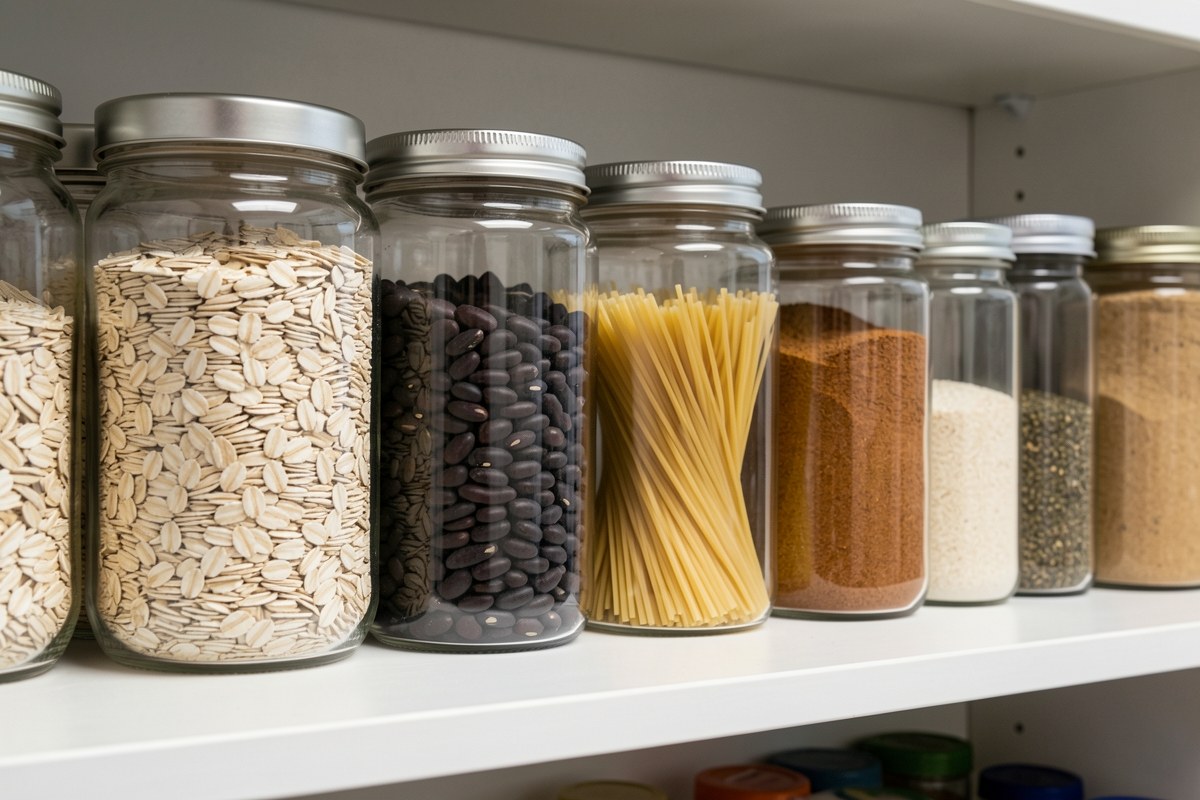
- Store grains and flours in airtight containers to keep them fresh and pest-free.
- Keep a running list on your phone or fridge so you can jot down staples as you run low.
Sources: Kvaroy Arctic, Grace-Filled Homemaking
Frequently asked questions
What are the best non-perishable proteins?
Canned fish (tuna, salmon, sardines, mussels), nut butters, and canned beans are excellent non-perishable proteins. They are convenient, healthy, and can be used in a variety of dishes, from salads to pasta to wraps.
Sources: Kvaroy ArcticHow do I store spices to keep them fresh?
Store spices in airtight containers in a cool, dark place, away from heat, moisture, and direct sunlight. Avoid keeping them above the stove or near the dishwasher. Ground spices typically maintain their best flavor for about six months to a year.
Can I freeze pantry staples?
Yes, many pantry staples can be frozen to extend their shelf life. Nuts and seeds stay fresh longer in the freezer, and you can freeze whole-grain flours to prevent them from going rancid. Cooked beans and grains also freeze well in portion-sized containers for quick meals.
What is a good alternative to pasta?
Good alternatives to traditional wheat pasta include whole-wheat pasta, which provides more fiber, and gluten-free pseudograins like quinoa, amaranth, and buckwheat. These can be used in similar ways to pasta in salads or hot dishes. Spiralized vegetables like zucchini are also a lighter option.
Sources: Wheat Foods Council, National Celiac AssociationHow many pantry staples do I really need?
You don't need a huge number to get started. About 20 to 30 versatile items can cover a wide variety of meals. Focus on whole grains, canned goods, frozen produce, healthy fats, spices, and a few proteins. You can build from there as your cooking needs evolve.
Are there any pantry staples that help reduce food waste?
Frozen vegetables and fruits are excellent for reducing food waste because they keep for months and you can use only what you need. Canned and dried goods also have long shelf lives, and using them in meals can help avoid buying fresh items that might spoil before you cook them.
Sources: Kvaroy ArcticSources
- Healthy Food for the Whole Family: Essential Pantry Staples — Kvaroy Arctic
- Healthy Pantry Staples for a Real Food Diet — Grace-Filled Homemaking
- Grains and Pseudograins — Nutrivore
- Ancient Wheat and Pseudo Grains — Wheat Foods Council
- Pseudo grains — National Celiac Association